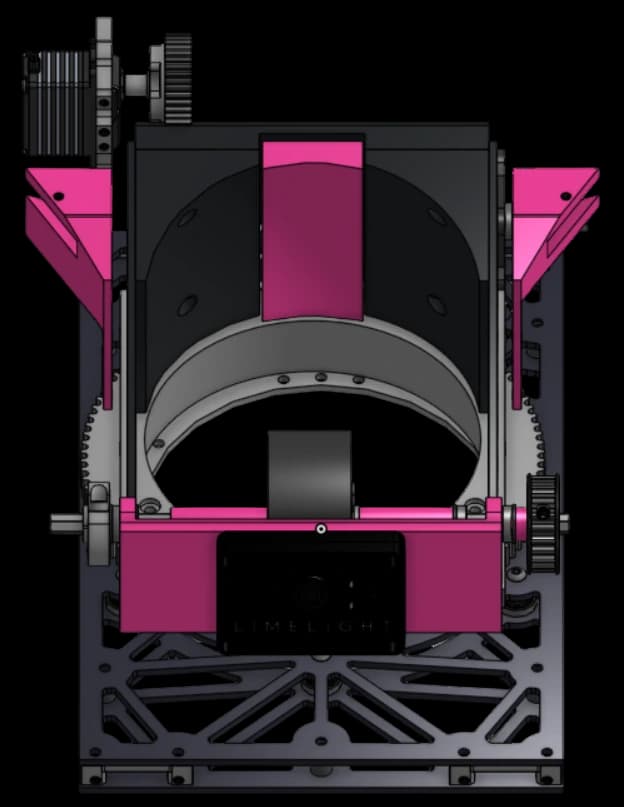
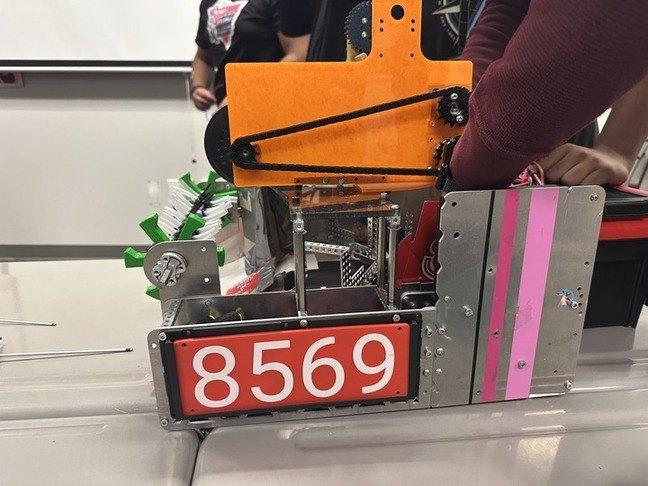
Shooter
Adjustable hood and weighted flywheel on a belt-driven turret that aims itself.
CAD render, then the real part.
2025–26 DECODE season robots
Elite Ball Knowledge carried us through States. Then we tore it down and built the Worlds bot around one question: how fast can one artifact get from the floor to the goal?
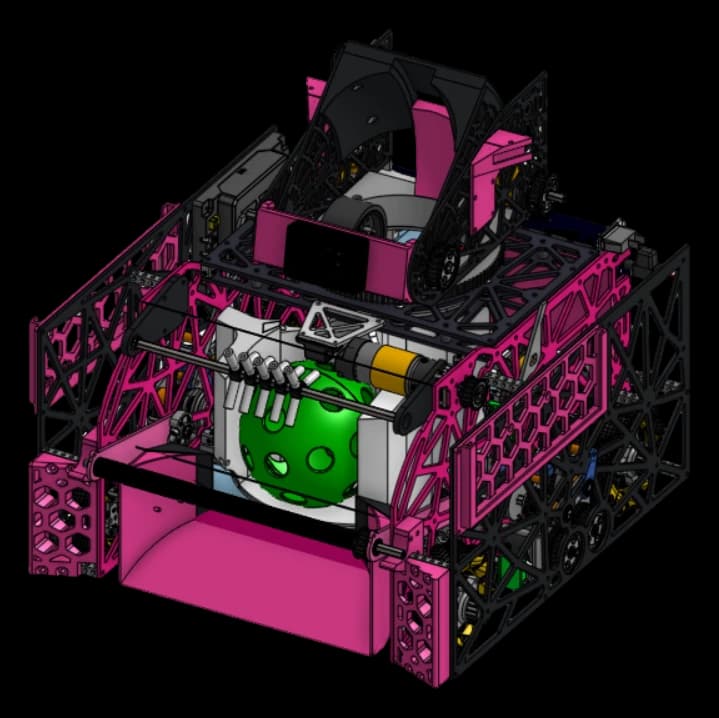
States robot · 2025–26 DECODE season
Eight motors and six servos around a Geneva colour sorter. We modelled every part in CAD before anything was cut, then made it in the NCSSM FabLab.
Adjustable hood and weighted flywheel on a belt-driven turret that aims itself.
CAD render, then the real part.
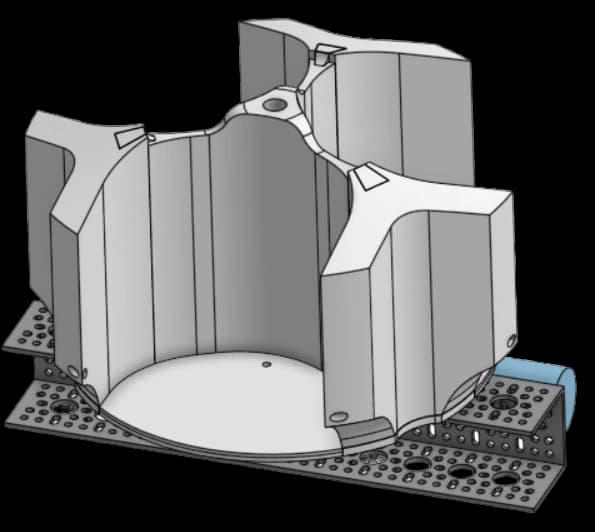
Sorts artifacts by colour using a Geneva mechanism with a powered stick transfer.
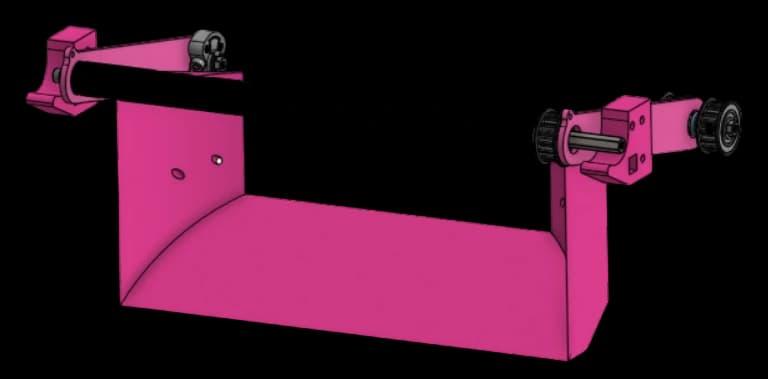
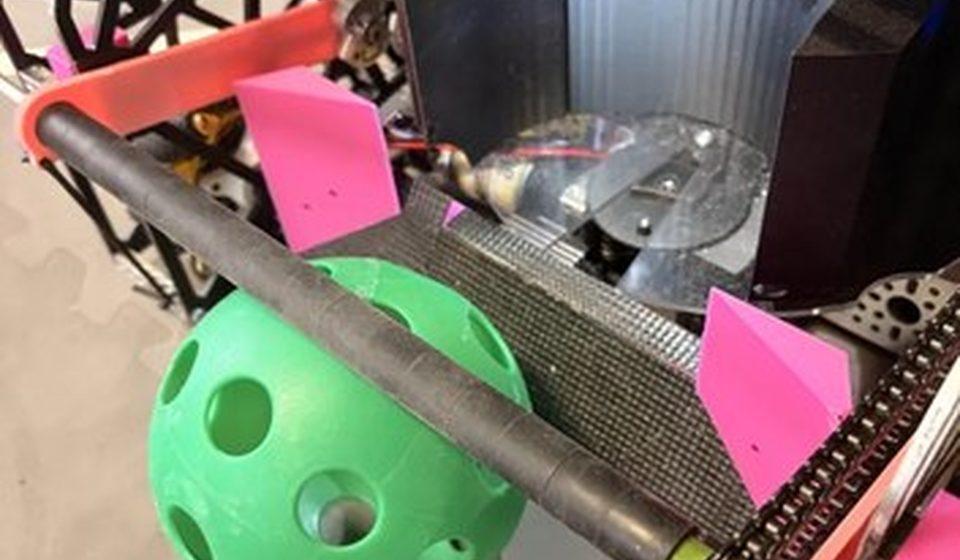
Two-layer compliant roller intake feeding a steep ramp straight into the rack.
CAD render, then the real part.
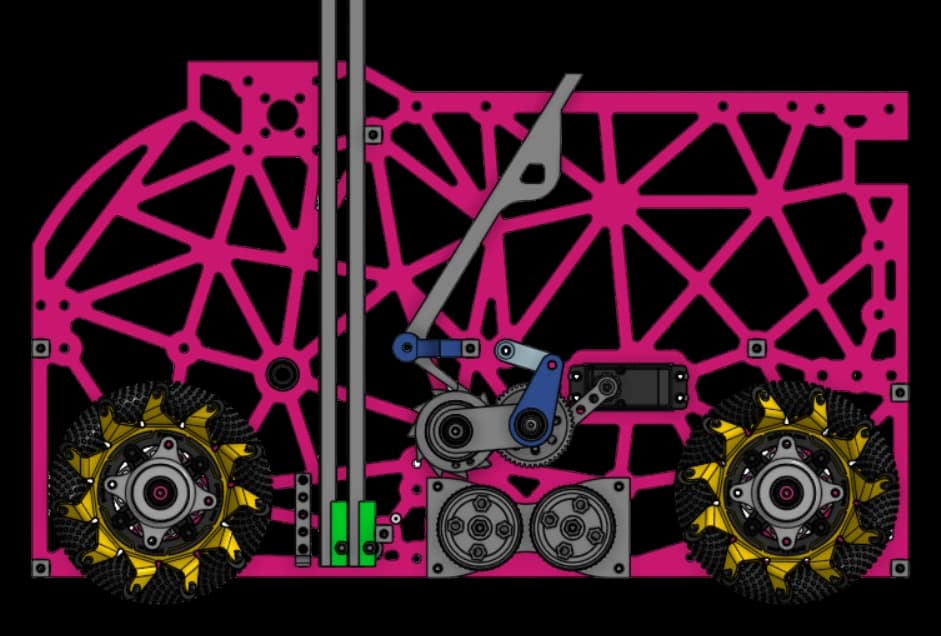
Mecanum belt drive with dual odometry pods and a PTO that lifts the robot.
The intake and transfer each took three versions and the Spice Rack took two. Here's what broke each time and what we changed.
Getting an artifact off the floor and into a sorting slot without stalling or squashing it.
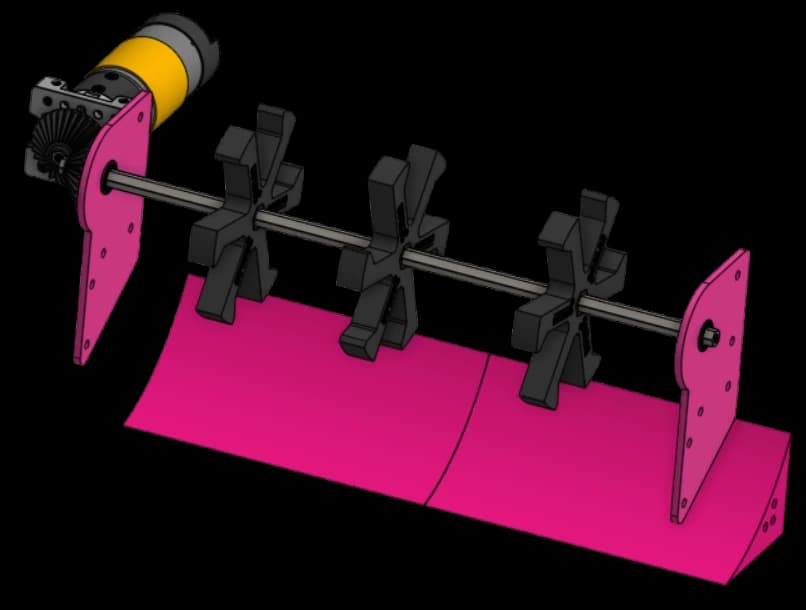
Faster than a four-bar claw, but bootleg wheels caught on the artifact notches and the ramp slope pressed balls flat.
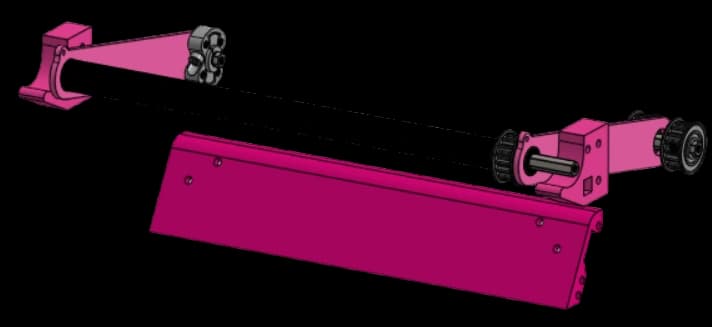
Silicone rollers and a chain-driven compliant bar. A steeper ramp with guides aims the artifact at the slot.
A second powered row with surgical tubing closes the gap above the rollers, so artifacts stop slipping and breaking colour detection.
The sorter has to stop dead every time the transfer fires — and a gear-driven spindexer never stopped in the same place twice.
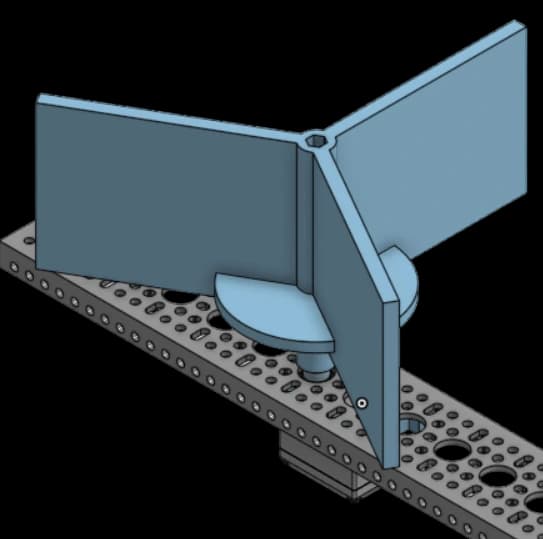
Minimal artifact support. Hard to start and stop cleanly; ended up a centimetre or two out of position and bounced balls back.
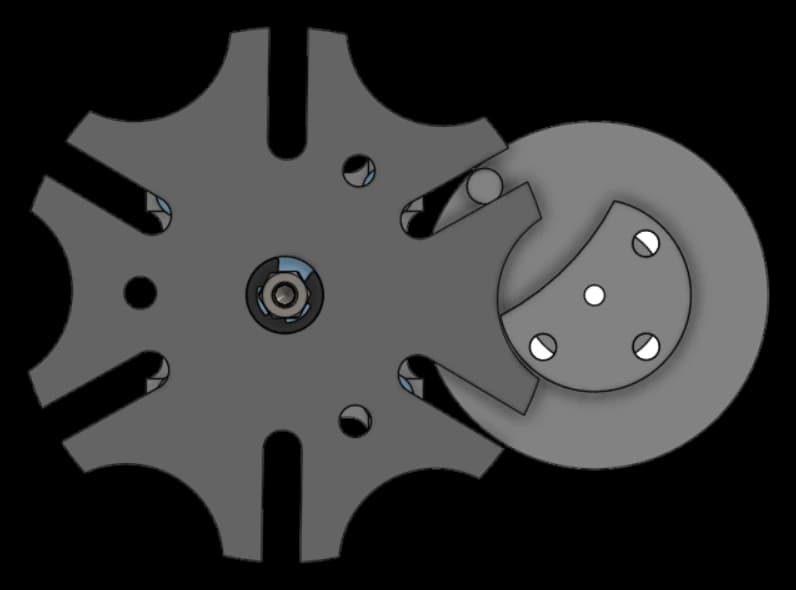
A Geneva gear lets the motor run continuously while indexing to six fixed stops — under a millimetre of error, tuned to the intake and shooter.
Moving a sorted artifact into the shooter fast enough to keep up with the Geneva.
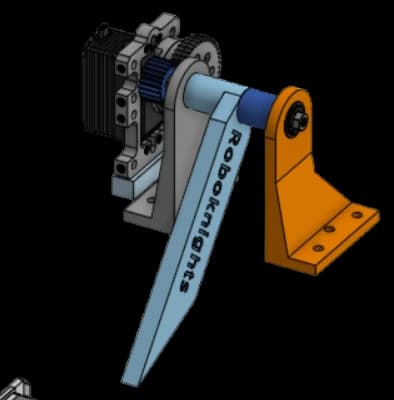
Carried over from our Robot in 5 Weeks bot. Pushed the ball up mechanically, but reset too slowly to use the Geneva's full speed.
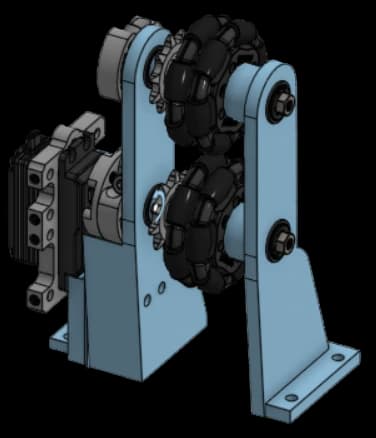
An Axon servo driving omni wheels. Right idea, not enough power — balls stalled in the dead space and stopped the rack.
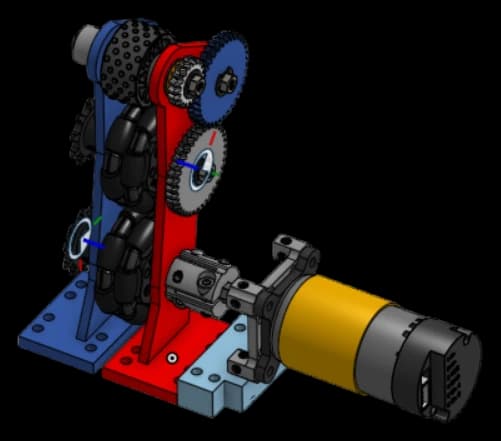
Motor swap plus a third roller to cover the dead space. Sorted balls now shoot in tandem — 2–5 second cycles including sorting.
We scored each way of making a part on nine criteria, including strength, weight, repairability and cost. 3D printing scored highest overall, so it makes the non-structural parts. goBILDA covers standard hardware, and we save the waterjet for the drivetrain, which takes hits all match.
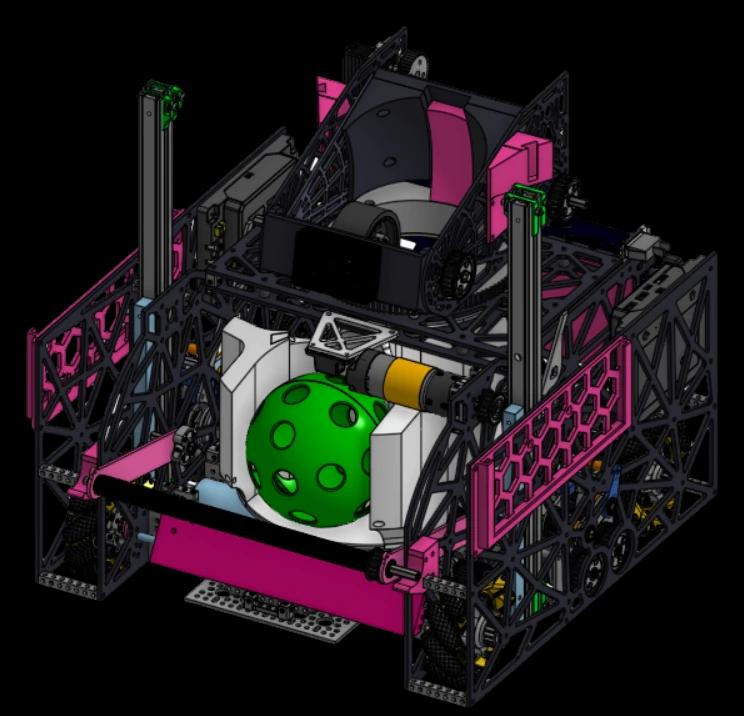
Worlds robot · 2025–26 DECODE season
After the State Championship we stopped iterating and started over. We built the Worlds robot with our sister team SigmaCorns #22377, and it trades the spindexer and the lift for a single straight-shoot path. Cycle time dropped from 8 seconds to 2.5.
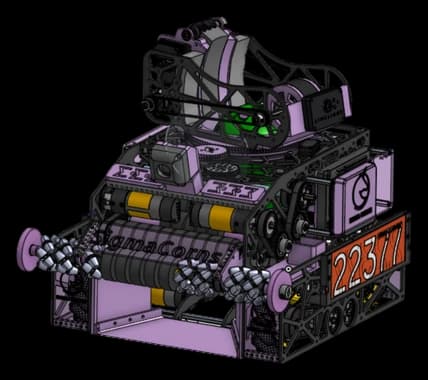

Curved guides jammed on multi-artifact pickups. V3 uses right-biased vectoring wheels and a shallower compliant ramp, with dead wheels at each end that let artifacts go while the intake keeps running.
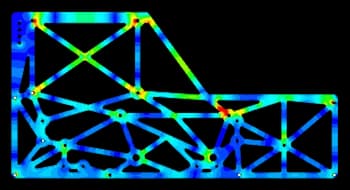
Finite element analysis on the drivetrain plates showed us where material was doing nothing, so we pocketed it out. The chassis is 15.2″ × 14.5″, with the battery and four motors low in the base.
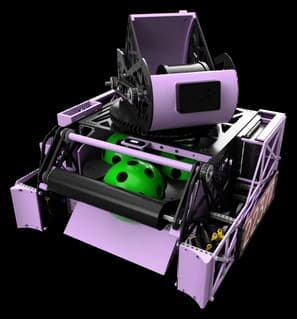
We scored each ranking point against its mechanical cost and committed to the goal RP. That let us cut the lift and the brake from the robot.